Introduction: The Strategic Value of Industrial Cladding
In global industries where corrosion accounts for $2.5 trillion in annual losses (NACE International), metal cladding emerges as the engineered solution. This process metallurgically bonds a corrosion-resistant alloy—titanium, zirconium, nickel—to structural carbon steel, delivering performance of solid exotic metals at 40-60% cost reduction. For procurement teams across oil, chemical, and energy sectors, cladding transforms asset management from reactive maintenance to strategic capital optimization.
Defining Cladding: Beyond Surface Protection
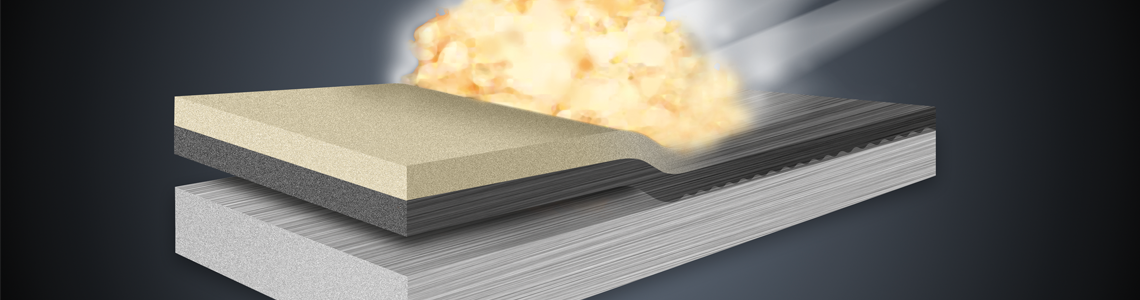
Cladding creates permanent metallurgical bonds between dissimilar metals through three primary methods:
-
Explosion Cladding: Detonation-driven solid-state bonding
-
Roll Bonding: Thermomechanical diffusion bonding
-
Weld Overlay: Fusion-based deposition
| Cladding | Weld Overlay | Hardfacing | |
|---|---|---|---|
| Bond Integrity | Metallurgical (210+ MPa shear) | Diluted fusion zone | Mechanical adhesion |
| Material Efficiency | 0% alloy dilution | 15-30% dilution | 10-20% waste |
| Service Life | 20+ years | 5-8 years | 3-5 years |
| Critical Application | Nuclear vessels | Valve seats | Crusher hammers |
YICHOU’s explosion cladding achieves zero dilution, preserving 100% clad alloy properties—a decisive advantage for sulfuric acid concentrators or hydrogen cryogenic vessels.
Oil and Gas Applications: Solving Extreme Corrosion Challenges
Offshore Pipeline Systems
-
Problem: Subsea piping suffers pitting corrosion at $7B/year replacement costs
-
YICHOU Solution: 3mm titanium-clad X65 steel pipes
-
Results:
-
Corrosion rate: 0.05 mm/year vs. 0.8 mm/year for carbon steel
-
Projected lifespan: 30 years (BP North Sea field data)
-
Sour Gas Processing
-
Problem: H₂S stress corrosion cracking in amine contactors
-
YICHOU Solution: Zirconium interlayered explosion-clad vessels
-
Certification: Complies with NACE MR0175/ISO 15156
-
Case: Aramco Abqaiq plant – 12 years continuous operation
Hydrogen Transport Infrastructure
-
Challenge: Hydrogen embrittlement in storage tanks
-
Innovation: Aluminum-steel transition joints with 210 MPa cryogenic toughness
-
Standard: Meets ISO 21009 design requirements
Cladding Technology Selection Guide
Explosion Cladding vs. Roll Bonding: Procurement Considerations
| Parameter | Explosion Cladding | Roll Bonding |
|---|---|---|
| Material Compatibility | All dissimilar pairs (Ti/Steel, Ta/Cu) | Limited pairs (SS/Steel, Cu/Steel) |
| Minimum Clad Thickness | 0.5 mm | 0.1 mm |
| Production Lead Time | 30 days | 15 days |
| Maximum Plate Size | 20m × 10m | 6m × 2m |
| Cost Premium | 15-20% | Baseline |
| Optimal Use Cases | FPSO hulls, nuclear dividers | Heat exchanger shells, piping |
Procurement Decision Framework:
-
Criticality Assessment: Explosion cladding for safety-critical components
-
Volume Requirements: Roll bonding for high-throughput projects
-
Corrosion Severity: Exotic clads (Zr, Ta) for >80°C mineral acids
Answering Top Cladding Questions from Industrial Buyers
Cladding Service Life and Durability
-
Question: How long does metal cladding last in HCl service?
-
Data: 25-year documented service life (per ASTM G31 testing)
-
Comparison: 4× longer than rubber lining, 3× longer than weld overlay
Material Selection for Marine Environments
-
Challenge: Seawater pitting/crevice corrosion
-
Optimal Clad: 90-10 Cu-Ni/Steel composite
-
Cost Advantage: 30% savings versus super duplex stainless steel
Cladding vs. Weld Overlay Economics
| Cost Factor | Solid Alloy Vessel | Clad Vessel | Weld Overlay Vessel |
|---|---|---|---|
| Material Cost | $480,000 | $210,000 | $290,000 |
| Fabrication | $120,000 | $85,000 | $150,000 |
| 10-Year Maintenance | $360,000 | $40,000 | $210,000 |
| Total Ownership Cost | $960,000 | $335,000 | $650,000 |
Repair Protocols for Damaged Cladding
-
Prevention: YICHOU’s 100% automated UT scanning (ASTM E317)
-
Field Repair: Qualified procedures per ASME BPVC Section IX
-
Critical Note: Weld repair of zirconium cladding requires argon trailing shields
Future-Ready Cladding Solutions
Digital Integration
-
QR-code traceability linking plates to:
-
Mill test reports
-
Explosive batch certificates
-
UT inspection maps
-
Sustainable Manufacturing
-
92% metal scrap recycling rate
-
Closed-loop water treatment systems
-
ISO 14001-certified Nanjing facility
Global Technical Support
-
72-hour emergency response for cladding failures
-
On-site metallurgical analysis
-
Dedicated portal for technical documentation
Procurement Action Plan
-
For Project Engineers:
-
Specify ASME SB898 for clad plate procurement
-
Require third-party validation reports
-
-
For Maintenance Managers:
-
Implement annual eddy current testing
-
Establish cladding integrity baselines
-
-
Strategic Sourcing Advantage:
-
Leverage YICHOU’s bonded warehouse for 30-day delivery
-
.jpg)
Conclusion: The New Economics of Corrosion Management
Metal cladding transitions from protective coating to strategic asset enhancement. When Aramco achieved 22-year service life in sour gas processing through zirconium cladding, it validated the technology’s ROI. As hydrogen and carbon capture projects escalate, cladding delivers the material science solution where conventional alloys fail.
Next Steps for Technical Buyers
Get in Touch with Yichou
Let Yichou help you achieve excellence in your next project. Whether you need raw materials, custom alloy solutions, or precision-manufactured components, our team is ready to assist.
- Email us: [email protected]
- Call us/whatsapp: +86 13355741031
- Chat with us: Live chat support available on our website