If you are a procurement manager or systems integrator building a commercial drone fleet in 2026, you have likely encountered the same silent killer of project timelines: component mismatch. You source a high-end FeiyuTech gimbal only to find it doesn't talk to your Hubsan airframe; you purchase a Unicore UM981 RTK module but the firmware integration drags on for six weeks. YICHOU eliminates this friction. As a specialized manufacturer and integration partner, YICHOU bridges the gap between component selection and fully operational, mission-ready systems. We don't just sell you a box of parts; we deliver an engineered solution where every screw, every connector, and every line of IMU data is validated before it reaches your assembly line. This article is not a marketing brochure. It is a technical deep dive into the ecosystem of stabilization and navigation, analyzing the components you already search for, and explaining why YICHOU is the only partner capable of unifying them into a reliable, export-ready product.
How Can We Ensure Our Drone Gimbal Provides Stable Footage Even During High-Speed Maneuvers or Wind Gusts?
Gimbal stabilization relies on high-frequency Inertial Measurement Unit (IMU) feedback loops and advanced quaternion-based algorithms to counteract angular velocity in real-time. FeiyuTech gimbals utilize the 2025 Quaternion Algorithm architecture, enabling instant adaptive vibration compensation and ensuring sub-pixel level image sharpness across pitch, roll, and yaw axes during dynamic flight.
For procurement officers sourcing for inspection, agriculture, or cinematography fleets, the difference between a “hobbyist” stabilizer and an industrial-grade gimbal is not just the price tag; it is the algorithm driving the brushless motors. The global brushless 3-axis gimbal market is projected to reach 1.268 billion dollars by 2031, driven largely by commercial UAV applications where optical clarity is non-negotiable. YICHOU exclusively partners with and distributes FeiyuTech payloads because their architecture is built for the long haul. Unlike generic gimbals that overcompensate and create "micro-jitter," FeiyuTech’s proprietary 2025 Quaternion Algorithm adapts to vibration frequencies in a fraction of a second. This algorithm leverages quaternion mathematics to avoid the singularity issues inherent in Euler angle calculations, specifically the dreaded gimbal lock that plagues older or cheaper stabilization units during aggressive flight. When you combine this with FeiyuTech’s AI Tracking 4.0, which uses edge computing to lock onto subjects even when the drone yaws aggressively, you get a system that requires zero post-processing stabilization.
However, algorithm efficacy is useless if the mechanical gimbal cannot handle the payload weight. YICHOU advises clients to evaluate the payload-to-motor-torque ratio. FeiyuTech’s SCORP 3 KIT, for instance, supports a payload capacity of up to 3.5kg, making it compatible with heavy-lift LiDAR and multispectral cameras used in precision agriculture. YICHOU’s Role: We pre-configure the gimbal dampening system specifically for the resonant frequency of your Hubsan airframe. When you order a YICHOU solution, you aren't just getting a FeiyuTech gimbal in a box; you are receiving a system where the gimbal's damping plates have been tuned to eliminate the specific harmonic vibration caused by Hubsan’s rotor configuration. This level of pre-flight tuning is what separates a successful mission from a blurred data set.
What Are the Long-Term Reliability and Export Compliance Issues with Sourcing Hubsan Drone Components Internationally?
Long-term reliability in Hubsan components depends on sourcing genuine OEM parts with verifiable supply chain provenance and ensuring compliance with export control classifications. Hubsan’s proprietary flight controllers and imaging systems require matched firmware versions. YICHOU provides fully compliant, traceable Hubsan OEM components engineered to interface seamlessly with third-party payloads and RTK modules.
Hubsan maintains a stronghold in the commercial and FPV sectors, with its Zino Mini Pro series featuring 1-inch CMOS sensors capable of 4K recording at 30fps on a stabilized gimbal. For industrial applications, the appeal of Hubsan lies in its mature ecosystem; mature GPS positioning, visual tracking, and obstacle detection algorithms refined over a decade. But for the overseas procurement officer, the challenge is twofold: Authenticity and Export Compliance.
The gray market is flooded with counterfeit or refurbished Hubsan gimbal cameras and drone parts. A fake vibration dampener might save you two dollars on the BOM (Bill of Materials) but will cost you a $20,000 inspection drone when it fails mid-flight over a power substation. YICHOU’s supply chain is direct and verified. We source Hubsan camera gimbals and spare parts directly from the authorized distribution network, ensuring every IMU and camera sensor has a verifiable production history. Furthermore, the integration of a Hubsan airframe with a third-party RTK module requires a specific understanding of the UART and CAN Bus protocols. YICHOU manufactures custom wiring harnesses and mounting brackets specifically for the Hubsan and FeiyuTech combination. We remove the guesswork. You provide the mission parameters; we deliver a plug-and-play airframe where the Hubsan flight controller already speaks to the Unicore GNSS receiver.
Is the Unicore UM981 Series the Right RTK Module for High-Dynamic Drone Applications and Urban Canyon Environments?
The Unicore UM981 series is a multi-frequency RTK and INS integrated module designed for high-dynamic drone scenarios requiring 50Hz positioning updates and 100Hz IMU raw data output. Its 1408-channel NebulasIV SoC ensures rapid initialization and sub-centimeter accuracy even in challenging environments with signal obstruction.
This is where the engineering becomes critical. A standard GPS module might update position once per second (1Hz). In a drone traveling at 15 meters per second, that 1-second latency represents 15 meters of position drift, enough to clip a wind turbine blade or miss a crop row. The Unicore UM981 series changes the game. By integrating a high-speed floating-point processor and a dedicated RTK co-processor, the UM981 delivers RTK positioning output at up to 50Hz and raw IMU data output at a blistering 100Hz. This high-frequency data stream is essential for sensor fusion algorithms that rely on tightly coupled navigation to smooth out trajectory deviations.
For YICHOU’s clients, this translates into supreme confidence in autonomous navigation. The module supports all major global constellations, including GPS L1/L2/L5, BDS B1I/B2I/B3I, GLONASS G1/G2/G3, and Galileo E1/E5a/E5b/E6. A key differentiator of the UM981 is its advanced multipath mitigation engine. In urban canyons where GNSS signals bounce off glass skyscrapers, the NebulasIV SoC employs advanced correlator techniques and a robust tracking loop design to distinguish the true line-of-sight signal from reflected noise. This prevents the sudden, erroneous position jumps that cause drones to drift dangerously off course. More importantly, the built-in MEMS (Micro-Electro-Mechanical Systems) inertial navigation allows the drone to maintain positioning for a short period even during temporary GNSS signal blockage, such as flying under a bridge or between tall grain silos.
YICHOU’s Integration Expertise: The raw power of the UM981 is formidable, but its integration is not trivial. The module’s antenna requires a precise ground plane on the drone’s PCB to minimize multipath errors. YICHOU engineers are expert in BDStar and Unicore hardware integration. We design the RF front-end and ensure that the UM981’s RTCM v3.x differential data stream is correctly parsed by the flight controller. For clients requiring centimeter-level accuracy in remote areas without NTRIP service, we configure the UM981 to utilize the onboard PPP (Precise Point Positioning) services like B2b-PPP and Galileo HAS, achieving 10cm accuracy without a local base station.
How Does BDStar's UM98XC Series Enhance Global Positioning in Remote Areas Without Ground Networks?
The BDStar and Unicore UM98XC series leverages satellite-based L-Band augmentation via TruePoint REACH to deliver real-time centimeter-level PPP-AR positioning globally. It achieves convergence times under five minutes with horizontal accuracy better than three centimeters RMS, eliminating the need for local CORS infrastructure in remote operations.
One of the most significant pain points for industrial drone operators in agriculture, mining, or offshore inspection is the lack of terrestrial RTK correction networks. You cannot place a base station in the middle of the ocean or a 10,000-acre remote ranch. The UM98XC series is the solution YICHOU recommends for these scenarios. This module is an “All in One” powerhouse: RTK plus PPP-RTK plus PPP-AR plus Heading algorithms. It represents the cutting edge of BDStar RTK module for UAV applications.
When paired with YICHOU’s drone systems, the UM98XC utilizes the TruePoint REACH L-Band service. This is a 24/7 satellite-based augmentation system that beams correction data directly to the drone’s antenna via geostationary satellites. The result is a horizontal accuracy of better than 3 cm (RMS) and vertical accuracy better than 6 cm (RMS) with a convergence time of under five minutes. For a procurement officer, this means one SKU works globally. You do not need to source different radios or SIM cards for different regions. The YICHOU platform with integrated BDStar UM98XC is ready to fly precision missions anywhere on Earth, from the Australian outback to the North Sea.
When Should We Choose a Systork RTK Module Over a Unicore Module for Our Drone BOM?
Systork RTK modules are optimal for UAV applications prioritizing SWaP (Size, Weight, and Power) constraints and native DroneCAN protocol support. Modules like the Wren Mini feature integrated antennas and magnetometers, simplifying hardware integration and reducing BOM costs for lightweight commercial drones and automated robotics fleets.
While Unicore provides top-tier, industrial-grade performance, YICHOU recognizes that not every mission requires the full spectrum of 1408-channel tracking. For smaller airframes, cost-sensitive mapping projects, or applications where DroneCAN protocol is a strict requirement, YICHOU integrates Systork GNSS RTK modules.
Systork specializes in high-precision GNSS for UAVs and robotics. Their Linnet series provides centimeter-level accuracy for autonomous operation and is compatible with PX4 and ArduPilot autopilots. For YICHOU’s clients, the most compelling offering is the Systork Wren Mini. This module features an integrated Low Noise Amplifier (LNA) antenna, a built-in magnetometer, and native DroneCAN communication. This integration eliminates the need for a separate external compass module and reduces wiring complexity; critical factors when building drones at scale. The power draw is also significantly optimized, consuming less than 200mW in typical operation, which extends flight time for lightweight battery-powered systems.
YICHOU’s Procurement Advantage: We offer clients a side-by-side performance analysis of Unicore vs. Systork based on their specific altitude and airspeed. If you are flying slow, low-altitude mapping grids, Systork provides excellent value and simplifies the BOM. If you are flying high-speed lidar corridors or operations in dense urban environments, the Unicore UM981’s superior anti-jamming and 100Hz IMU raw data rate is essential. YICHOU does not push the most expensive module; we push the most appropriate module for your thermal and dynamic profile.
What Are the Key Considerations When Integrating an External GNSS RTK Module with an Existing FeiyuTech or Hubsan Gimbal System?
The primary integration challenges involve mitigating electromagnetic interference (EMI) between the GNSS antenna and gimbal motors, synchronizing IMU data streams for sensor fusion, and configuring CAN Bus or UART protocols to ensure the flight controller receives timely, uncorrupted position and attitude data.
This is where YICHOU’s value proposition solidifies. A FeiyuTech gimbal contains powerful brushless motors and an IMU. A Unicore UM981 contains a sensitive RF receiver. If you place the GNSS antenna too close to the gimbal motor, the EMI will devastate the RTK fix quality, causing cycle slips and loss of lock. YICHOU manufactures custom carbon fiber mounting plates that provide both the required ground plane for the GNSS antenna and the necessary spacing to reduce noise coupling. Carbon fiber is selected not just for weight savings but for its radio-frequency transparency, ensuring the antenna pattern is not distorted.
Furthermore, data synchronization is critical. The UM981 outputs IMU data at 100Hz. If the flight controller is only sampling at 10Hz, you are wasting 90 percent of your navigation capability. YICHOU provides pre-flashed firmware and configuration files specific to the Hubsan, FeiyuTech, and Unicore combination. We handle the buffer management and timing alignment so that the video footage from the FeiyuTech gimbal is geotagged with sub-decimeter precision. For surveying and mapping firms, this geospatial accuracy is the difference between a deliverable that passes QA/QC and one that fails.
How Does YICHOU Streamline the Supply Chain and Reduce Lead Times for Drone OEMs?
YICHOU reduces lead times by acting as a single-source integrator for gimbals, airframes, and high-precision GNSS modules. We maintain buffer stock of FeiyuTech, Hubsan, Unicore, and Systork components, perform in-house assembly and quality assurance, and provide fully tested, export-compliant subsystems ready for immediate integration into your production line.
In the world of B2B drone manufacturing, time is money, and fragmented supply chains are the enemy of profitability. Sourcing gimbals from one vendor, airframes from another, and RTK modules from a third leads to logistical nightmares: three separate shipping invoices, three different customs clearance delays, and zero accountability when components arrive DOA (Dead on Arrival) or fail to integrate.
YICHOU’s model is engineered for procurement efficiency. Our facility in Ningbo, China, serves as your offshore integration center. We leverage our close partnerships with FeiyuTech, a global leader with products in over 100 countries and a top Amazon gimbal seller, and Hubsan, masters of core drone technology, to secure priority allocation and competitive pricing. We then combine these components with either Unicore UM981 or Systork modules.
What you receive from YICHOU is a complete subsystem. It arrives in a single crate, with a single commercial invoice, and a single set of compliance documentation. More importantly, it has been powered on and tested. We verify the RTK fix, we verify the gimbal calibration, and we verify the UART communication link. This pre-shipment inspection and integration service eliminates the costly “bench integration” phase where your engineering team discovers that the gimbal connector pinout doesn't match the flight controller header. With YICHOU, your team can focus on the mission software, not the hardware plumbing.
What is the True Cost of Using Consumer-Grade Components in Commercial Industrial Drones?
The true cost includes increased mission failure rates due to sensor drift and mechanical fatigue, higher RMA (Return Merchandise Authorization) expenses from field failures, and significant engineering hours lost to custom driver development and troubleshooting. YICHOU’s industrial integration eliminates these hidden soft costs.
It is tempting for a startup OEM to see the retail price of a FeiyuTech SCORP C2 and a Hubsan airframe and think they can save money by assembling these themselves. However, consumer-grade components are not calibrated for commercial duty cycles. A vlogger using a FeiyuTech gimbal for 20 minutes a week in a climate-controlled studio is not the same use case as a survey drone flying 3-hour missions in 40-degree Celsius heat over a construction site. The grease in the gimbal bearings degrades faster, the IMU bias shifts with temperature, and the vibration profile is entirely different.
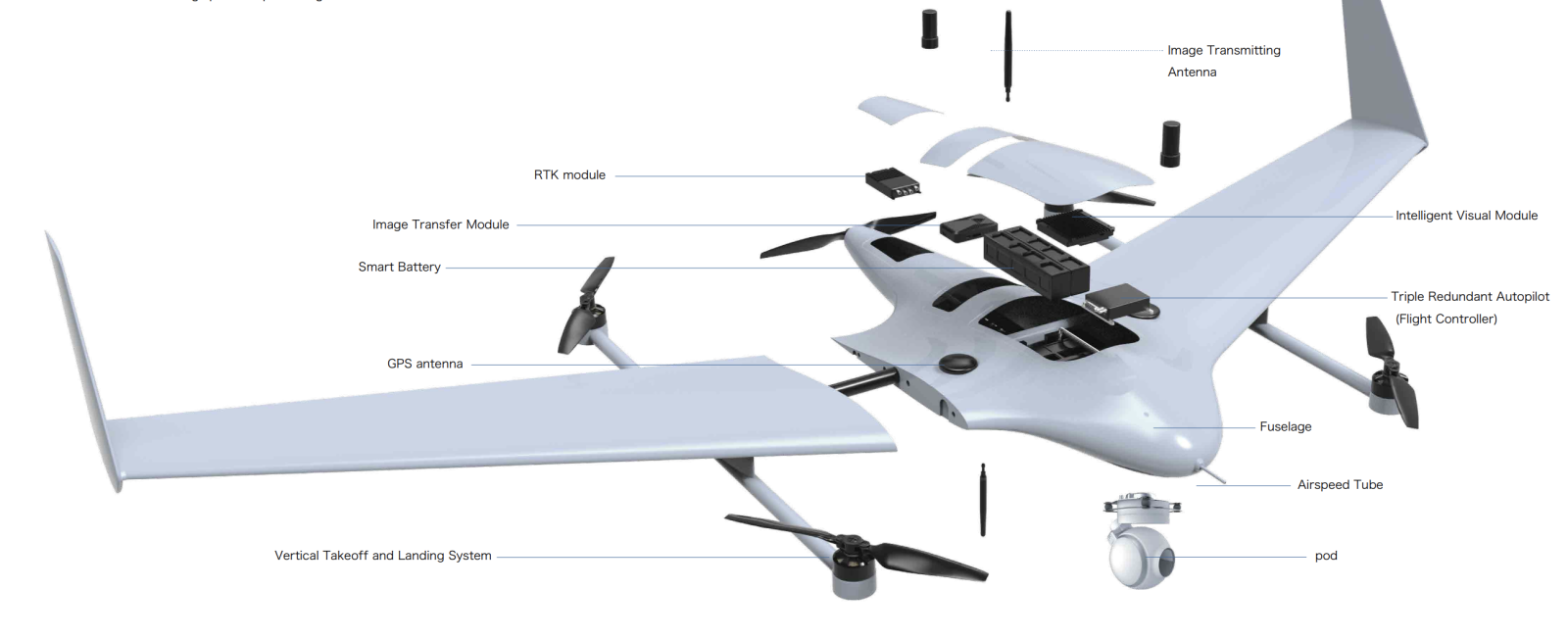
YICHOU addresses the hidden costs that procurement managers often overlook:
· RMA and Warranty Support: When a drone fails in the field, you need a partner who can diagnose the root cause. Was it the gimbal motor controller? The Unicore RTK lock? The Hubsan ESC? With a piecemeal supply chain, you spend weeks playing “blame roulette” between suppliers. With YICHOU, you have a single point of accountability.
· Firmware Maintenance: YICHOU maintains a library of validated firmware combinations. We ensure that the FeiyuTech AI Tracking 4.0 update does not break compatibility with the Hubsan flight controller. This ongoing configuration management is a service few integrators provide but every commercial fleet needs.
· Material Selection: Consumer parts often use standard FPC (Flexible Printed Circuit) cables. YICHOU can upgrade these to high-flex, industrial-grade silicone wiring harnesses capable of withstanding over 1 million flex cycles without failure.
Can YICHOU Provide Custom Engineering Support for Unique Payload or Mounting Requirements?
Yes, YICHOU provides custom mechanical and electrical engineering support for drone payload integration. This includes designing bespoke mounting brackets, developing custom cable harnesses for unique pinouts, modifying antenna ground planes for optimal GNSS performance, and tuning gimbal PID (Proportional-Integral-Derivative) parameters for non-standard payloads.
Standard products solve standard problems. But if you are integrating a specialized multispectral camera or a gas detection sensor, you have a custom problem. Off-the-shelf mounting plates are rarely flat enough, and the center of gravity is often off by millimeters; enough to cause the gimbal motors to overheat and fail prematurely.
YICHOU offers the following custom engineering services:
· Mechanical Design: We utilize CAD (Computer-Aided Design) and CNC (Computer Numerical Control) machining to create mounting interfaces that ensure the FeiyuTech gimbal’s center of gravity is perfectly aligned. This is crucial for the longevity of the gimbal motors and for accurate Hubsan flight dynamics.
· RF Engineering: For Unicore and BDStar RTK modules, we design custom antenna mounts that maximize the ground plane while minimizing drag. We can also tune the RF path for specific L1/L2/L5 band performance, ensuring optimal carrier-to-noise ratio (C/N0) for a stable RTK fix.
· Firmware Customization: YICHOU works with the underlying SDKs (Software Development Kits) of Unicore modules to customize the data output string. Do you need NMEA-0183 or only RTCM 3.2? Do you need the 100Hz IMU data streamed over a secondary UART? We configure the module precisely to your flight controller’s requirements.
By choosing YICHOU, you are not just buying components; you are buying engineering bandwidth. You free up your internal R&D team to focus on your core value proposition, whether that’s advanced autonomy, sensor fusion, or cloud-based analytics, while we handle the gritty, essential work of making the drone fly straight and film clearly.
Frequently Asked Questions from Procurement and Engineering Leads
Can YICHOU source FeiyuTech gimbal cameras and Hubsan drone parts in wholesale quantities for commercial OEMs?
Yes. YICHOU maintains direct B2B relationships with FeiyuTech and Hubsan, enabling wholesale procurement of gimbals, airframes, and spare parts at competitive volume pricing with full manufacturer warranty coverage and export compliance documentation.
Does the Unicore UM981 RTK module support BDS B2b-PPP for remote operations?
Yes. The Unicore UM981 series fully supports BDS-3 PPP-B2b service, allowing the module to achieve decimeter to centimeter-level accuracy in remote areas without requiring a local base station or NTRIP connection, provided the B2b signal is within view.
Is YICHOU capable of shipping integrated drone systems with BDStar RTK modules to North America and Europe?
Yes. YICHOU is an experienced exporter of integrated electronics and unmanned systems. We handle all necessary export classifications, harmonized system codes, and logistics documentation for seamless customs clearance in North American and European markets.
What is the advantage of using the Systork Wren Mini for a DroneCAN-based autopilot?
The Systork Wren Mini features native DroneCAN protocol support and an integrated antenna/magnetometer. This reduces wiring complexity and component count for PX4 and ArduPilot systems, significantly simplifying the BOM and improving overall system reliability in compact airframes.
How does YICHOU ensure quality control on FeiyuTech gimbals before shipping?
YICHOU performs a multi-point pre-shipment inspection on every gimbal subsystem. This includes verifying motor calibration across all three axes, testing AI tracking responsiveness, validating UART communication with Hubsan flight controllers, and conducting a visual inspection for any physical defects or mounting irregularities.
Can YICHOU provide a pre-assembled Hubsan drone with a custom Unicore RTK integration?
Yes. This is YICHOU’s core competency. We build, configure, and test fully integrated Hubsan airframes with your choice of Unicore UM981, UM98XC, or Systork RTK modules. The unit is shipped ready to fly (RTF) with all firmware pre-flashed and all sensors calibrated.
.jpg)
Get Quote
- Email us: [email protected]
- Call us/whatsapp: +86 13355741031
- Chat with us: Live chat support available on our website